
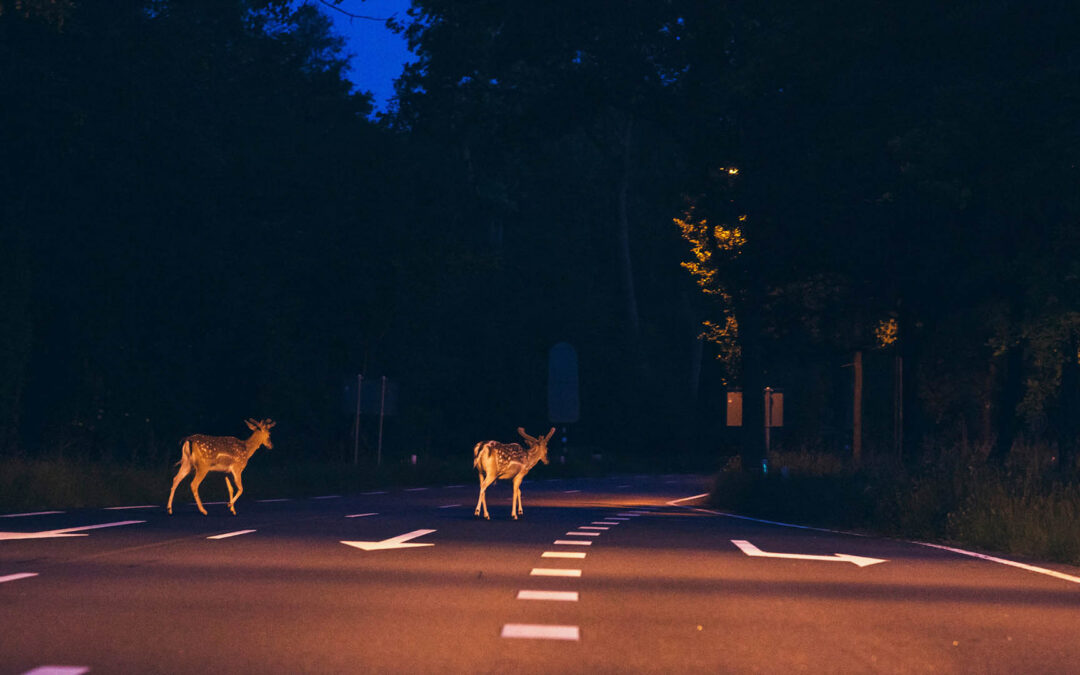
Deer-related accidents are more common than many drivers realize, especially during early morning and evening hours. Reduced visibility and increased animal activity make nighttime driving particularly risky.
Understanding when and where deer are most active—and how to respond—can help reduce your chances of a collision.
Why Deer Accidents Happen More at Night
Deer are most active during dusk and dawn, which often coincides with lower visibility for drivers. At night, limited lighting makes it more difficult to spot animals near or crossing the road.
Other contributing factors include:
- Rural or wooded areas
- Seasonal migration patterns
- Mating season (typically fall)
- Roads near fields or water sources
Being aware of these conditions can help you stay more alert.
Watch for Warning Signs
Deer crossing signs are placed in areas where animal activity is common.
When you see these signs:
- Reduce your speed
- Increase your level of awareness
- Scan both sides of the road
These signs indicate a higher likelihood of deer entering the roadway.
Use Your High Beams When Possible
High beams can improve visibility and help you spot deer sooner.
When driving in low-traffic areas:
- Use high beams to illuminate the road ahead
- Switch to low beams when approaching other vehicles
Better visibility gives you more time to react.
Scan the Roadside Carefully
Deer often travel in groups, so if you see one, others may be nearby.
Look for:
- Movement near the edge of the road
- Reflections from deer eyes in your headlights
- Shadows or shapes in wooded areas
Staying alert to your surroundings can help you anticipate potential crossings.
Slow Down in High-Risk Areas
Reducing your speed gives you more time to react if a deer enters the road.
Be especially cautious:
- On rural roads
- Near wooded or grassy areas
- During peak activity times (dusk and dawn)
Even a small reduction in speed can make a difference in avoiding a collision.
What To Do If a Deer Is in the Road
If a deer suddenly appears:
- Slow down as much as possible
- Brake firmly but stay in your lane
- Avoid swerving, which can lead to loss of control or collisions with other vehicles
Maintaining control of your vehicle is the safest response.
Why Avoiding Collisions Matters
Hitting a deer can cause:
- Significant vehicle damage
- Personal injury
- Insurance claims and increased costs
Preventing these accidents helps protect both your safety and your finances.
The Bottom Line
Deer are a common hazard on the road, especially at night. By staying alert, reducing speed, and understanding where and when deer are most active, you can lower your risk of an accident.
Safe driving habits and awareness are key to avoiding collisions and staying protected behind the wheel.
Staples & Associates Insurance is an independent insurance agency specializing in farm insurance, home insurance, auto insurance, life insurance, business insurance and more in Maryland and Delaware.
We provide personalized insurance solutions designed to protect farms, families, and businesses with coverage tailored to local risks and evolving industry changes. (410) 546-3999 https://staplesagency.com/