
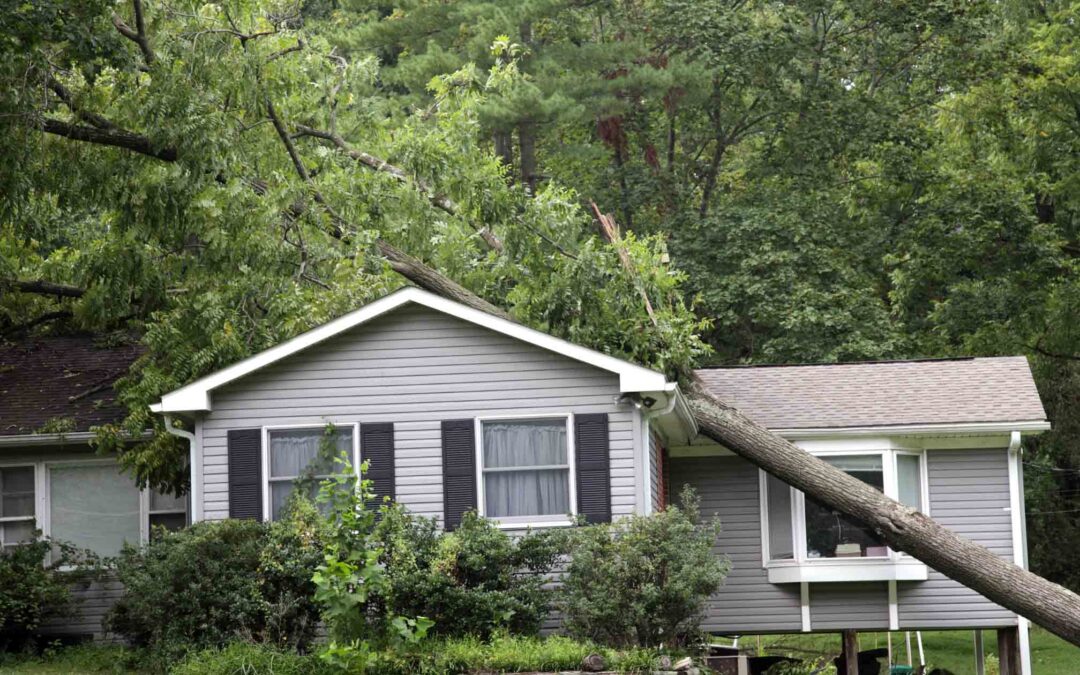
A summer thunderstorm rolls through, the wind picks up, and suddenly a tree is lying across your roof—or worse, across your neighbor’s property.
Who pays for the damage?
Does it matter whose tree it was?
And what if the tree lands on your car instead of your house?
Tree damage is one of those insurance situations that seems straightforward until it actually happens. At Staples & Associates Insurance, we help homeowners throughout North Bethesda, MD, Salisbury, MD, Harrington, DE, and surrounding communities understand how their homeowners and auto insurance may respond when storms, wind, and falling trees cause damage.
Here’s what property owners should know before the next storm.
Does Homeowners Insurance Cover a Fallen Tree?
In many cases, homeowners insurance may cover damage caused by a fallen tree when the loss results from a covered event, such as wind or a storm.
For example, if strong winds knock a healthy tree onto your home and damage the roof, your homeowners policy may help pay for covered repairs, subject to your policy limits and deductible.
Coverage can depend on:
-
- Why the tree fell
- What the tree damaged
- The condition of the tree before it fell
- Your specific policy provisions
- Applicable deductibles and limits
That’s why it’s important to look at the circumstances surrounding the loss rather than simply asking whether “fallen trees are covered.”
What If My Neighbor’s Tree Falls on My House?
This is one of the biggest misconceptions surrounding fallen trees.
You might assume that because the tree belonged to your neighbor, their insurance automatically pays for damage to your home.
That’s not necessarily the case.
If a healthy tree on your neighbor’s property falls onto your house during a severe storm, you would generally start by contacting your own homeowners insurance company about damage to your property.
The situation can become different if negligence is involved—for example, if there is evidence that the tree was clearly dead or hazardous and the property owner knew about the problem but failed to address it.
Determining responsibility can depend heavily on the individual circumstances.
The important takeaway: whose yard the tree came from doesn’t necessarily determine whose insurance responds.
What If My Tree Falls on My Neighbor’s House?
The same principle can work in reverse.
If a healthy tree on your property is knocked over unexpectedly by wind and damages your neighbor’s home, your neighbor may need to file a claim with their own homeowners insurance.
However, if you knew the tree was dead, diseased, or dangerous and failed to take reasonable action, liability questions could arise.
That’s one reason homeowners should take potentially hazardous trees seriously.
If you notice:
-
- Large dead branches
- Significant leaning
- Visible rot
- Cracks in the trunk
- Exposed or damaged roots
- Signs of disease
consider having the tree evaluated by a qualified professional.
Taking action before a storm can protect your property—and potentially prevent a complicated insurance claim.
What If a Tree Falls on My Car?
Here’s where the type of insurance coverage becomes especially important.
Homeowners insurance generally isn’t what protects your vehicle from a fallen tree.
Damage to a vehicle caused by a falling tree would typically fall under comprehensive auto insurance coverage, if you carry it.
Comprehensive coverage is designed to help with certain losses that aren’t caused by a collision, which may include:
-
- Falling trees or branches
- Hail
- Windstorms
- Theft
- Vandalism
- Certain animal-related damage
If you carry liability-only auto insurance without comprehensive coverage, damage from a fallen tree may not be covered by your own auto policy.
This is a good reason to review comprehensive coverage even on vehicles that are paid off.
What If a Tree Falls but Doesn’t Damage Anything?
Suppose a storm knocks a tree over in your yard, but it doesn’t hit your home, garage, fence, or another insured structure.
Will homeowners insurance pay to remove it?
Maybe—but don’t assume it will.
Tree removal coverage can depend on the circumstances of the loss and the language in your individual policy. Policies may have specific requirements and limits for debris or tree removal.
Before hiring a cleanup company and assuming insurance will reimburse the expense, contact your insurance agent or carrier to understand how your policy applies.
What About Damage to a Fence, Shed, or Detached Garage?
Homeowners insurance often includes coverage for other structures on your property.
Depending on the policy and cause of loss, this can include structures such as:
-
- Detached garages
- Sheds
- Fences
- Gazebos
If a tree damages one of these structures during a covered storm, your homeowners insurance may help with repairs, subject to the policy’s coverage limits and deductible.
It’s worth reviewing your other-structures limit periodically, particularly if you’ve added or upgraded structures around your property.
Who Pays for Tree Cleanup?
Tree removal and debris cleanup can get expensive quickly, particularly after a major storm when tree services are in high demand.
Whether your insurance helps pay for removal can depend on:
-
- Whether the tree damaged a covered structure
- Whether it blocked an insured property’s access
- Why the tree fell
- Specific debris-removal provisions
- Policy limits
Coverage for removing the tree itself may also be subject to separate limits.
Your insurance agent can help you understand what your particular policy provides.
What Should You Do After a Tree Falls?
Once everyone is safe, document the damage before cleanup begins whenever possible.
Take photos and videos showing:
-
- The entire fallen tree
- Where the tree originated, if possible
- Damage to your roof or siding
- Damage to vehicles
- Fences or detached structures
- Interior water damage
- Fallen branches and debris
Avoid climbing onto a damaged roof or approaching downed power lines.
If emergency repairs are necessary to prevent additional damage, keep receipts and documentation of the work performed.
Then contact your insurance company or agent promptly to discuss the next steps.
Summer Storm Risks in Maryland & Delaware
Late summer can bring thunderstorms, strong winds, heavy rainfall, and remnants of tropical systems throughout Maryland and Delaware.
But the risks aren’t identical everywhere.
North Bethesda, MD: Mature trees combined with thunderstorms and strong wind can create falling-tree and power-line hazards, even without a major hurricane.
Salisbury, MD: Eastern Shore properties can experience strong winds and heavy rainfall from thunderstorms, tropical storms, and hurricanes.
Harrington, DE: Severe thunderstorms and tropical weather can bring damaging winds capable of bringing down trees and large branches.
No matter where you live, inspecting the trees around your property before severe weather arrives can help reduce risk.
Is Your Insurance Ready for the Next Storm?
A fallen tree can potentially involve several different parts of your insurance program.
Depending on what happens, you may be looking at:
-
- Dwelling coverage
- Other structures coverage
- Personal property coverage
- Personal liability coverage
- Comprehensive auto coverage
- Debris removal provisions
That’s why reviewing your policies before there’s a tree on your roof is much easier than trying to understand them after a storm.
Let Staples & Associates Help You Review Your Coverage
At Staples & Associates Insurance, we help homeowners understand how their coverage may respond when the unexpected happens.
Whether you’re concerned about your home, vehicles, liability limits, or storm-related risks, our team can review your policies and help identify potential coverage gaps.
If you live in North Bethesda, Salisbury, Harrington, or elsewhere in Maryland or Delaware, contact Staples & Associates Insurance for a homeowners and auto insurance review.
Because when the next tree comes down, you should already know who to call.
Staples & Associates Insurance is an independent insurance agency with locations in North Bethesda, Maryland, Salisbury, Maryland and Harrington, Delaware specializing in farm insurance, home insurance, auto insurance, life insurance, business insurance and more.
We provide personalized insurance solutions designed to protect farms, families, and businesses with coverage tailored to local risks and evolving industry changes. (410) 546-3999 | https://staplesagency.com/