
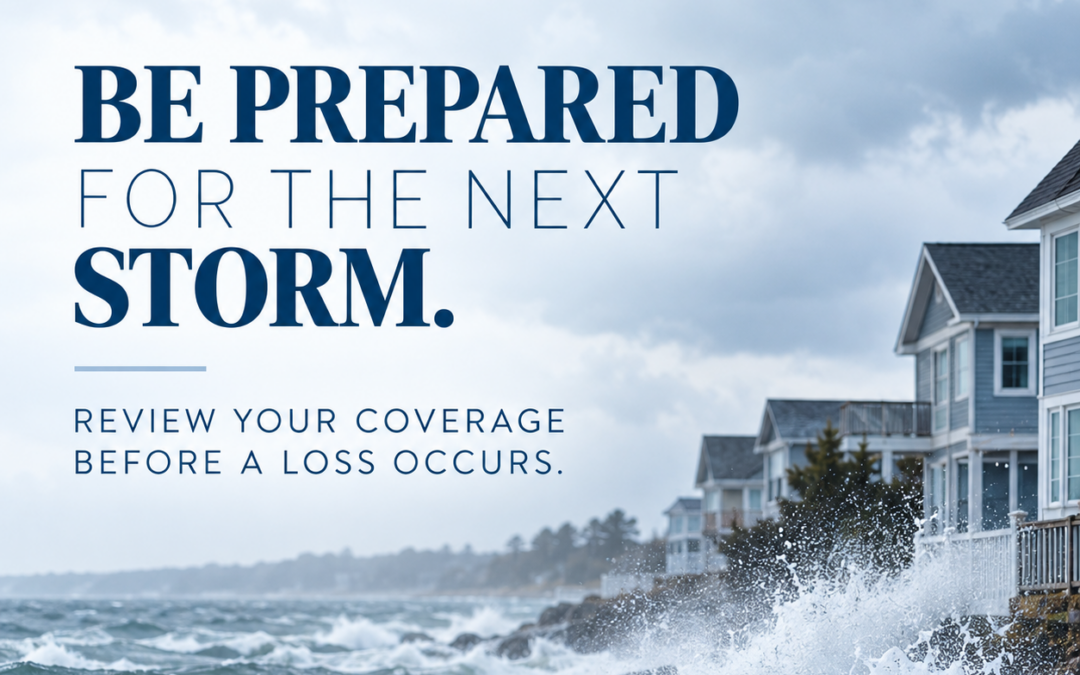
The recent nor’easter was another reminder of just how quickly Mid-Atlantic weather can change. Heavy rain, strong winds, coastal flooding, falling trees, and power outages can develop quickly and leave homeowners, business owners, and farmers dealing with unexpected damage.
After a major storm, it’s natural to ask, “Did my property make it through?” But there’s another important question worth asking before the next storm arrives: “Do I know how my insurance would respond if it didn’t?”
Even if you made it through the recent weather without damage, now is a good opportunity to review your insurance and better understand what protection you actually have.
What Should You Review?
Insurance policies aren’t one-size-fits-all. Coverage, deductibles, limits, and exclusions can vary depending on your policy and insurance carrier. A few areas worth reviewing include:
Homeowners Insurance: Take a closer look at your dwelling replacement cost, roof coverage, wind or named-storm deductibles, water backup coverage, coverage for detached structures, and other limitations that could affect a storm-related claim.
Commercial Property Insurance: Business owners should consider their building and business personal property limits, deductibles, business income coverage, equipment, and how their policy may respond if storm damage temporarily prevents normal operations.
Farm Insurance: Farms can have unique exposures beyond a traditional home or business. Barns and other farm structures, machinery, equipment, livestock-related exposures, and other property may require specific coverage and limits.
Don’t Forget About Flooding
One of the most important things to understand after a storm is that not every type of water damage is treated the same way by an insurance policy. Standard homeowners and many commercial property policies generally do not cover flooding caused by rising or overflowing surface water. Separate flood insurance may be needed.
That distinction can become especially important here in Maryland and Delaware, where coastal storms and heavy rainfall can create flooding concerns even for properties that aren’t directly on the coast.
Know Your Coverage Before You Need It
The worst time to discover a coverage limitation is after a loss has already happened.
Replacement costs change. Property gets renovated. Businesses purchase new equipment. Farms add buildings or machinery. Insurance needs can change over time, even when the policy itself hasn’t received much attention.
A periodic insurance review gives you an opportunity to ask questions, understand your deductibles and limits, identify potential gaps, and make informed decisions about your coverage before the next storm arrives.
Let’s Review Your Insurance
At Staples & Associates Insurance, we’re here to help you better understand what your policies do—and don’t—cover.
Already a client? Let us review your current coverage with you.
Not currently a client? Bring us your existing policies and let our team provide a second opinion. We can walk through your coverage and help you understand where you currently stand.
Don’t wait until after a loss to find out what’s actually in your policy.
Disclaimer: Coverage availability, terms, conditions, limits, deductibles, and exclusions vary by policy and insurance carrier. This information is provided for general educational purposes and is not a guarantee of coverage. Please refer to your individual policy documents and contact a licensed insurance professional for information regarding your specific coverage.